
A white paper by Matt Salmon, VP of Cybersecurity and AI Solutions, exploring how Cyberhill's Wolverine platform uses ontology-driven AI to transform cybersecurity from reactive firefighting into an intelligent, self-healing defense system.
Cyberhill Perspective
As cyber threats become increasingly complex, cybersecurity leaders face unprecedented pressure, not only from threat actors but also from their own executive team and Board. Cybersecurity budgets increase year after year, yet Boards and CEOs demand proof of value:
- Are we spending wisely?
- Where are the gaps in our defenses?
- Which tools are redundant or underutilized?
To meet these demands, CISOs must analyze vast amounts of cybersecurity data and provide leadership with informed advice on risks versus investments. Traditional analytics and dashboards often struggle to answer these questions, presenting fragmented alerts and metrics that fail to provide a comprehensive view of how investments translate into risk reduction and cyber resilience. What’s needed is a system that unites financial stewardship with adaptive defense.
But proving financial stewardship is only half the challenge. Even the best budget oversight can’t stop evolving threats, tool sprawl, and wasted resources. What CISOs need is not just visibility into costs, but a platform that can actively optimize defenses in real time. That’s where Cyberhill’s Self-Healing Cybersecurity Platform — Wolverine — proves vital to a CISO.
Wolverine is Cyberhill’s AI-powered cybersecurity platform — built to give CISOs real-time visibility, intelligent optimization, and self-healing defense.
See Wolverine for CybersecurityIntroducing Self-Healing AI Cybersecurity Platform — Wolverine
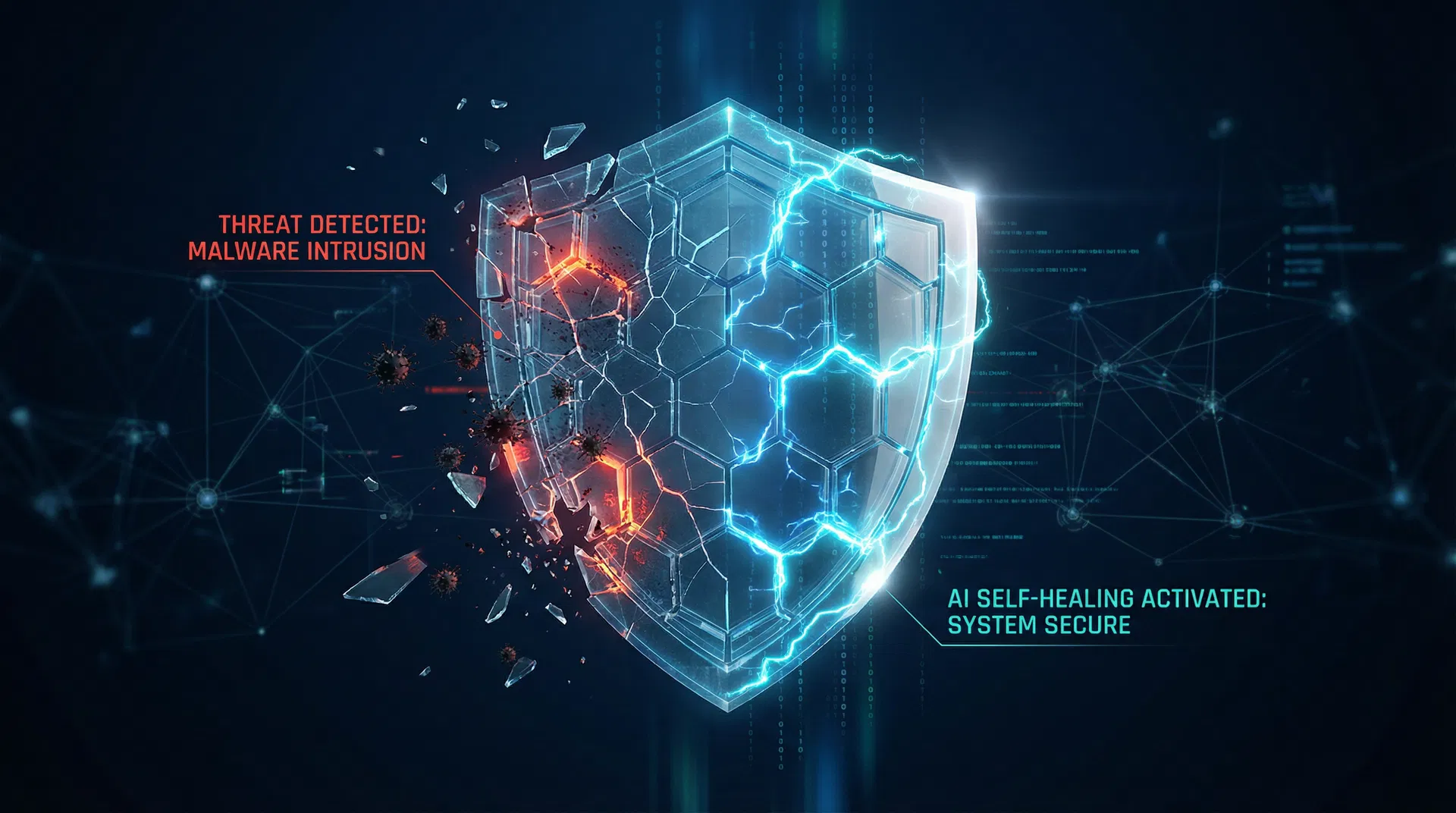
Just as the human body’s immune system detects threats, adapts, and restores balance, a self-healing AI cybersecurity platform (Wolverine) continuously:
- Detects risks and inefficiencies: from unused tool features to unprotected domains.
- Adapts coverage dynamically: reconfiguring defenses or recommending optimized allocations.
- Aligns with business priorities: ensuring investments protect what matters most.
Cyberhill’s Wolverine platform combines real-time monitoring, automated reasoning, and adaptive controls. It ingests data from across the cyber stack, interprets it through an ontology-driven data model, and then initiates corrective actions such as rebalancing tool coverage to reduce redundant spend or feature overload.
For cyber leaders, a self-healing cybersecurity posture means moving beyond firefighting to a system that safeguards both security and budget efficiency in real-time.
Ontologies in Cybersecurity
To truly heal cybersecurity landscapes through AI, it must first understand the system it protects. Without a clear map of tools, features, domains, and costs, AI is just reacting blindly. Ontologies provide that map.
An example of a cybersecurity ontology may represent:
- Tools in Use: SIEM, EDR, IAM, WAF, vulnerability management, DLP, and cloud security platforms.
- Features of Each Tool: Log correlation, anomaly detection, MFA enforcement, sandboxing, threat hunting, etc.
- Domain Coverage: Which parts of the stack each tool covers — network, endpoint, identity, application, cloud, supply chain, or compliance.
By mapping these relationships, an ontology does more than visualize your cybersecurity stack; it provides the framework that enables AI to provide actionable and accurate intelligence. CISOs are provided not only with what is deployed, but also with what is unused, redundant, or misaligned with their risk posture. This provides clarity in defense-in-depth: not just knowing what tools are available, but how they work together with the organization’s security strategy.
Learn more about the power of ontologies in enterprise AI through our white paper on Unlocking Trustworthy AI.
Read the Ontologies White PaperBenefits for a CISO
An ontology-enabled dashboard transforms CISO operations. Instead of static reports, it offers a dynamic command center (Wolverine dashboard) that delivers:
- Contextualized Metrics: Metrics are linked to both the tools producing them and the domains they cover.
- Heatmap of Features: Measures your cybersecurity stack against industry frameworks such as MITRE to see gaps and overlaps of features.
- Coverage Visualization: Dashboards provide a clear view of protected versus unprotected domains.
- Predictive and Prescriptive Analytics: AI forecasts where threats are most likely to penetrate based on gaps in tool coverage.
- Conversational Access: Ontology-driven AI allows CISOs to ask natural-language questions, such as, “Which tools overlap in endpoint security coverage?” or “What is our yearly spend per feature used versus total features available?” This capability delivers detailed, on-demand insights into posture, utilization, and costs.
See the Ask Your Stack Feature
Wolverine lets CISOs interrogate their security stack in plain English — no dashboards to learn, no reports to build. Ask anything about your posture, spend, or coverage.
Ask Your Stack →Cost and Utilization Analysis
In addition to managing risk, CISOs must demonstrate financial stewardship of the cybersecurity program. An ontology-driven dashboard supports detailed cost analysis across tools, features, and budgets, enabling reporting in terms relevant to executives. Key cost-related metrics include:
- Cost per Tool: The total yearly and quarterly spend for each cybersecurity tool (e.g., SIEM, IAM, EDR).
- Cost per Feature: The spend for specific modules within each tool (e.g., advanced analytics, threat hunting, compliance reporting).
- Features per Tool: The number of features available in each licensed product.
- Features in Use: The subset of features deployed and providing value.
- Utilization Rate: Percentage of licensed features being used, by tool and across the stack.
- Tool Utilization Rate: Percentage of licensed features actively used per tool and per feature.
- Coverage Cost Efficiency: Spend per domain vs. risk reduction provided.
- Overlap and Redundancy: Financial waste from duplicate domain coverage.
- Year-over-Year Budget Trends: Historical comparison of cybersecurity budget growth and tool spend over multiple years.
- Quarterly Costs per Tool: Breaking spend into quarterly reporting cycles for tracking budget adherence and forecasting.
- Budget Allocation Efficiency: Analysis of how much of the total budget is spent per domain (network, cloud, identity, etc.), and whether that spend matches the organization’s risk profile.
These metrics provide CISOs with a clear narrative for CEOs and Boards: “Here is what we spend, how effectively we use it, and where we can optimize.”
Wolverine’s ontology-driven dashboard gives CISOs conversational access to cost, coverage, and utilization data — in real time.
Book a Stack AssessmentCustomizing Your Wolverine
While a generic ontology highlights common domains, a custom ontology tailored to an organization’s cyber posture delivers greater value. Each enterprise deploys a unique combination of vendors, licenses, and features. Cyberhill customizes Wolverine to:
- Map Actual Tool Coverage: Show which features are licensed and active, versus which are dormant.
- Align with Business Risk: Connect tool capabilities to the threats that matter most for the industry.
- Identify Waste or Gaps: Expose underutilized tools, unused modules, or unprotected domains.
- Enable Tailored AI: AI can use the ontology to answer questions like, “Which of our controls protect critical financial data in the cloud?”
This approach turns the ontology into a dynamic blueprint of your cybersecurity stack, updated as tools, licenses, and threats evolve.
Revolutionizing Cyber Defense Using Cyberhill’s Wolverine
Combining ontologies with AI-driven analytics shifts dashboards from descriptive to conversational and prescriptive. CISOs can interactively query their stack, such as “Which features are we paying for but not using?” or “Show me our year-over-year SIEM spend.” This transformation converts dashboards into decision-making hubs, enabling CISOs to continuously optimize their risk posture and financial efficiency.
The best news is that Cyberhill has already built many of these ontologies within its lab, so Wolverine is less than 30 days away from your POC deployment.
Conclusion
Wolverine represents the next evolution in intelligent, self-healing cyber defense. Cyberhill customizes Wolverine to tools, features, and domains, and provides CISOs with clear insights into coverage, costs, and utilization. With conversational AI, dashboards transform into interactive strategic platforms, allowing organizations to evaluate both security and spending, thereby maximizing resilience and business continuity.
Wolverine is already 70% built for your organization. Let’s customize a portion of your stack within your POC, deploy Wolverine, and demonstrate its power.