DoW Instruction 8000.02 changes the standard for managing technology. The instruction asks Components to treat IT not as a set of local purchases and periodic inventories, but as an enterprise portfolio that can be compared, governed, optimized, and defended.
Download the official DoW Instruction 8000.02 PDF to read the public source document. The instruction was approved on 23 July 2026 and became effective on 29 July 2026. It applies across DoW Components, including the Military Departments, Joint Staff, Combatant Commands, Defense Agencies, and DoW Field Activities.
The shift from inventory to decision governance
Instruction 8000.02 establishes Information Technology Category Management as an enterprise operating discipline. Components must account for IT assets, align their IT category-management and asset-management status to the Technology Business Management (TBM) taxonomy, and report status to the DoW CIO on a recurring basis.
The policy direction is more consequential than a reporting exercise. It directs Components to use enterprise capabilities, agreements, and licensing arrangements to the maximum extent practical. When mission or cost calls for another approach, the decision must be supported with documented evaluation factors and rationale.
The leadership question has changed.
It is no longer only “what do we own?” It is “what should we standardize, retain, or retire, and what evidence will defend that decision?”
Three decisions that now need evidence
1. What should be standardized or brought under an enterprise agreement?
An enterprise agreement is not automatically the right answer simply because a product appears in more than one Component. Leaders need to know whether locally deployed tools are genuinely duplicative, whether they provide comparable capabilities, and what pricing, terms, dependencies, or mission impacts are involved before changing course.
2. What must be retained as a mission-or-cost exception?
“Mission or cost” is a meaningful policy exception, not a blank check. A defensible exception identifies the relevant capability, captures the evaluation factors, explains the operational impact, and retains a rationale that can survive acquisition, funding, and oversight review.
3. What can be consolidated without creating a new operational risk?
The risk of consolidation is not visible in a raw asset list. A tool may appear redundant at the product level while providing a unique feature, control, integration, or downstream dependency. The decision has to be evaluated before a retirement, migration, or license change is executed.
Why an inventory is not enough
An inventory records what each source says is present. It does not reconcile whether inconsistent records describe the same product, distinguish product overlap from capability overlap, model dependencies, or preserve the evidence behind a recommendation.
That is the difference between a list of assets and a decision model. For IT category management, leaders need asset, license, contract, cost, usage, feature, domain, and control information to connect in a comparable way, then need to reason across those relationships before acting.
The decision-ready operating model
An effective approach has four parts:
- Reconcile the records. Normalize inconsistent product, license, contract, and asset data without replacing the systems that already hold it.
- Model capability and dependency. Distinguish genuine duplication from coverage that is mission-critical, unique, or tied to a downstream control.
- Test the decision before acting. Evaluate consolidation, enterprise-agreement adoption, and standardization scenarios before a retirement or migration is executed.
- Retain the reasoning path. Preserve the evidence, assumptions, and exception rationale behind every recommendation.
This turns category management into a repeatable decision process rather than a periodic data call.
Where Wolverine fits
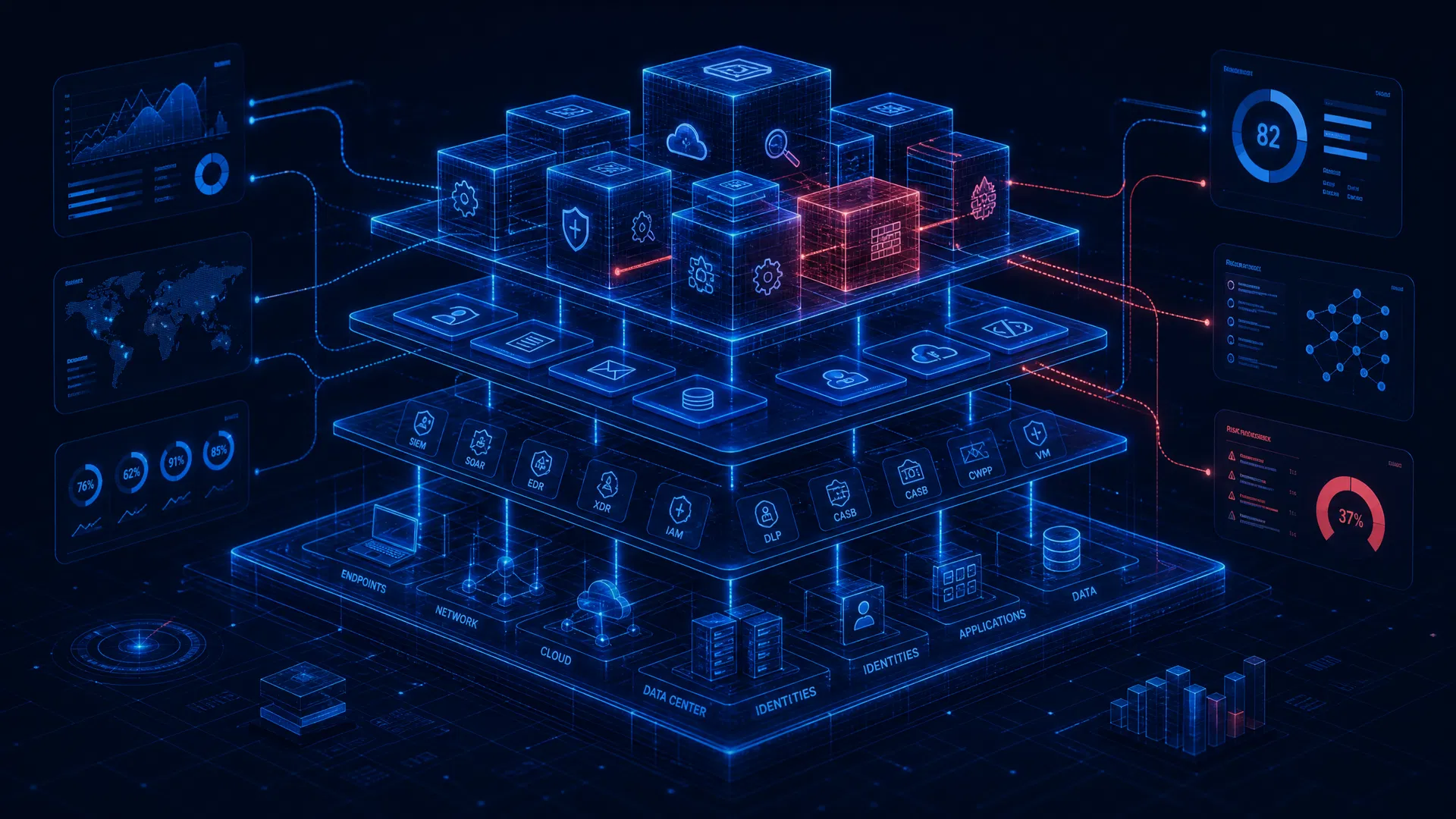
Wolverine works on top of existing discovery, asset-management, license-management, contract, and CMDB tooling. It reconciles what those systems produce into one model of the stack, then connects tools, features, domains, controls, cost, and dependencies.
The outcome is not a replacement system of record. It is a traceable decision layer that helps leaders ask and answer questions such as:
- Which software is licensed separately in more than one Component?
- If we move to an enterprise agreement, what capability or coverage do we lose?
- Which tools should be retained as mission-or-cost exceptions, and what evidence supports the rationale?
For the complete operational FAQ covering applicability, inventory scope, TBM alignment, governance, enterprise agreements, exceptions, deployment, and a Wolverine proof of concept, visit Wolverine for Public Sector IT.
This article is an executive technology and operating-model briefing. For the authoritative policy text, consult the official DoW Instruction 8000.02 and applicable Component guidance.